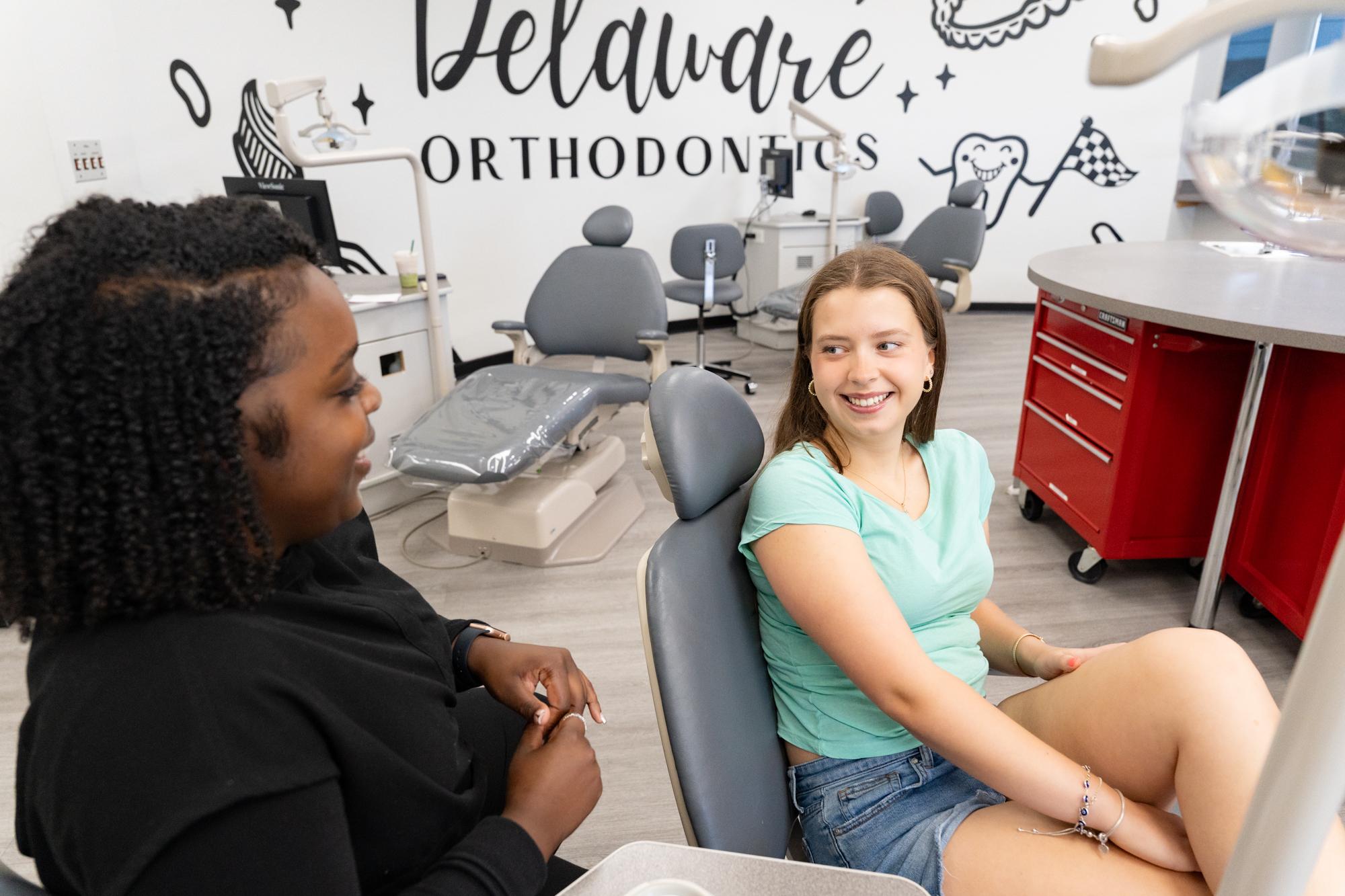
Choosing between braces and Invisalign isn’t just a clinical decision. It’s a lifestyle one. Both options can give you a straighter smile, but life with braces vs. Invisalign looks and feels very different day to day. Below, you’ll find what each treatment actually involves, from your morning routine to your favorite meals, so you can pick the option that fits your life.

Braces vs. Invisalign: The Quick Overview
Traditional braces use metal or ceramic brackets bonded to each tooth, connected by a wire that gently shifts your teeth into place. They stay on 24/7 and work continuously in the background. Invisalign uses a series of clear, removable plastic aligners worn 20 to 22 hours a day, switched out every one to two weeks as your teeth move.
Both approaches straighten teeth effectively. The difference lies in how each one shows up in your mornings, meals, and social life. Braces are hands-off once bonded, since they do the work whether you think about them or not. Invisalign gives you flexibility but demands discipline, because they only work when you wear them.
At Delaware Orthodontics, we help patients weigh these trade-offs every day. Here’s a preview of what you’ll learn below: how each treatment moves your teeth, what your daily routine looks like, side-by-side comparisons, cost factors, and which option tends to suit which patient.
How Each Treatment Moves Your Teeth
Both systems use gentle, sustained pressure to guide teeth into better positions. The mechanics differ, and so does your appointment schedule.
Traditional Braces
- Brackets and wires: Small brackets are bonded to each tooth. A wire runs through them, applying steady pressure in specific directions.
- Adjustments every 4 to 6 weeks: Your orthodontist tightens or replaces the wire during in-office visits to keep teeth moving on track.
- Always working: Because braces are fixed, they apply pressure around the clock without any effort on your part.
- Typical timeline: Treatment usually runs 18 months to 3 years, depending on case complexity.
Invisalign
- Custom clear aligners: You receive a series of trays, each slightly different from the last, designed to move teeth in small increments.
- Switch trays every 1 to 2 weeks: Each new tray picks up where the last left off.
- Removed for eating, drinking, and brushing: You take them out for meals and oral care, then put them right back in.
- Typical timeline: Many cases finish in 6 to 18 months, though complex cases can take longer.
According to the American Association of Orthodontists, treatment length depends on the severity of misalignment, patient age, and (for Invisalign) how consistently aligners are worn. Our providers will walk you through a realistic timeline based on your specific bite and goals during your consultation.
Braces tend to need more in-office adjustments. Invisalign check-ins are often shorter and less frequent, since you’re changing trays yourself at home.
A Day in the Life: Daily Routines Compared
What does living with each option actually feel like? Here’s how a typical day breaks down.
Morning
- With braces: You’ll spend extra time brushing carefully around brackets and under wires. A soft-bristled or electric toothbrush helps reach tight spots.
- With Invisalign: Rinse your aligners, brush your teeth, and pop the trays back in. Quick and simple.
Meals and Snacks
- With braces: Skip hard, sticky, or chewy foods like popcorn, caramel, whole apples, and bagels. These can pop brackets or bend wires.
- With Invisalign: Remove aligners before eating or drinking anything other than water. Brush or rinse before putting them back in, ideally within 30 minutes.
Work or School
- With braces: Brackets are visible. Ceramic (tooth-colored) options are less noticeable but still there.
- With Invisalign: Aligners are nearly invisible, which many adults appreciate for meetings, presentations, or photos.
Exercise and Sports
- With braces: A protective mouthguard is recommended for contact sports to prevent lip and cheek injuries.
- With Invisalign: Aligners can stay in during most workouts. For high-contact sports, remove them and wear a mouthguard instead.
Evening
- With braces: Flossing takes a threader, orthodontic floss, or a water flosser to get under the wire.
- With Invisalign: Take trays out and floss normally.
Bedtime
- With braces: Brush thoroughly and you’re set.
- With Invisalign: After any evening snack or drink, brush, rinse your aligners, and put them back in. Hitting that 20 to 22 hour daily wear time is what keeps treatment on schedule.

Side-by-Side Comparison: Braces vs. Invisalign
Here’s a quick reference to compare the two at a glance:
| Factor | Traditional Braces | Invisalign |
|---|---|---|
| Appearance | Visible metal or ceramic brackets | Clear, nearly invisible aligners |
| Comfort | Bracket irritation; wax helps sore spots | Smooth plastic; pressure with each new tray |
| Food restrictions | Avoid hard, sticky, chewy foods | None: remove aligners to eat |
| Oral hygiene | Requires threaders, special brushes, extra time | Brush and floss normally |
| Appointment frequency | Every 4 to 6 weeks for adjustments | Every 8 to 12 weeks for check-ins |
| Discipline required | Low: works on its own | High: must wear 20 to 22 hours daily |
| Typical treatment time | 18 months to 3 years | 6 to 18 months (case-dependent) |
| Best for | Complex bite issues, severe crowding | Mild-to-moderate cases, aesthetic priority |
Ultimately, the right choice comes down to your specific case and how you live. Braces work automatically, which helps busy patients or teens who might forget to reinsert aligners. Invisalign rewards consistency with a lower-profile experience and easier hygiene.
Who Is a Good Candidate for Each Option?
Both treatments work well, but each shines in different situations.
Braces May Be the Better Choice If You:
- Have severe crowding, gaps, or complex bite issues (deep bite, open bite, significant crossbite)
- Need major tooth rotation or vertical movement
- Are a younger patient who may struggle with aligner compliance
- Want a hands-off treatment that works without daily discipline
Invisalign May Be the Better Choice If You:
- Have mild-to-moderate alignment or spacing concerns
- Are an adult or teen who prioritizes a discreet look
- Play wind instruments or contact sports regularly
- Can commit to wearing aligners 20 to 22 hours every day
- Value easier brushing and flossing during treatment
Lifestyle Factors to Consider
Think about your profession, hobbies, and personality. If you’re in front of cameras or clients often, the near-invisibility of Invisalign is a real advantage. If you know you’d lose aligners or forget to put them back in, braces remove that worry entirely.
Age isn’t usually the deciding factor. Both work well for teens and adults. Younger children with growing mouths often do better with fixed appliances, since compliance is more predictable.
The best way to know for sure is a professional evaluation. Our team will assess your bite, discuss your goals, and recommend the option that fits both your smile and your lifestyle.
Frequently Asked Questions
Do dentists prefer Invisalign or braces?
Neither is universally preferred. Most orthodontists recommend the option that best matches your case. Braces are often chosen for complex bite corrections, while Invisalign is popular for mild-to-moderate alignment issues and patients who want a less visible option. Both are proven, effective tools when used for the right case.
What is the 30-minute rule with Invisalign?
The 30-minute rule means your aligners should be out of your mouth for no more than 30 minutes per meal. This helps you stay within the 20 to 22 hour daily wear time needed for treatment to progress on schedule. Longer breaks can slow your results or require extra trays.
How painful is Invisalign on a scale of 1 to 10?
Most patients report a 2 to 4, mostly during the first day or two with a new tray. The feeling is pressure rather than sharp pain and usually fades quickly. Braces can feel similar after adjustments, with occasional bracket or wire irritation between visits.
Can I play sports or a musical instrument with either option?
Yes to both. For contact sports, a mouthguard is recommended with braces to protect your lips and cheeks. With Invisalign, you can remove aligners and wear a standard mouthguard. Wind and brass instruments may take a short adjustment period with braces, while Invisalign generally causes little to no interference.
What happens if I lose an aligner or break a bracket?
If you lose an Invisalign tray, contact your orthodontist right away. You may be advised to move to the next tray or wear the previous one until a replacement arrives. A broken or loose bracket with braces should also be reported quickly so it can be repaired before it delays your treatment.
Still deciding between braces and Invisalign? The team at Delaware Orthodontics is happy to walk you through both options and recommend what fits your smile, schedule, and budget. Call us today or reach out online to schedule your consultation and take the next step toward the smile you want.